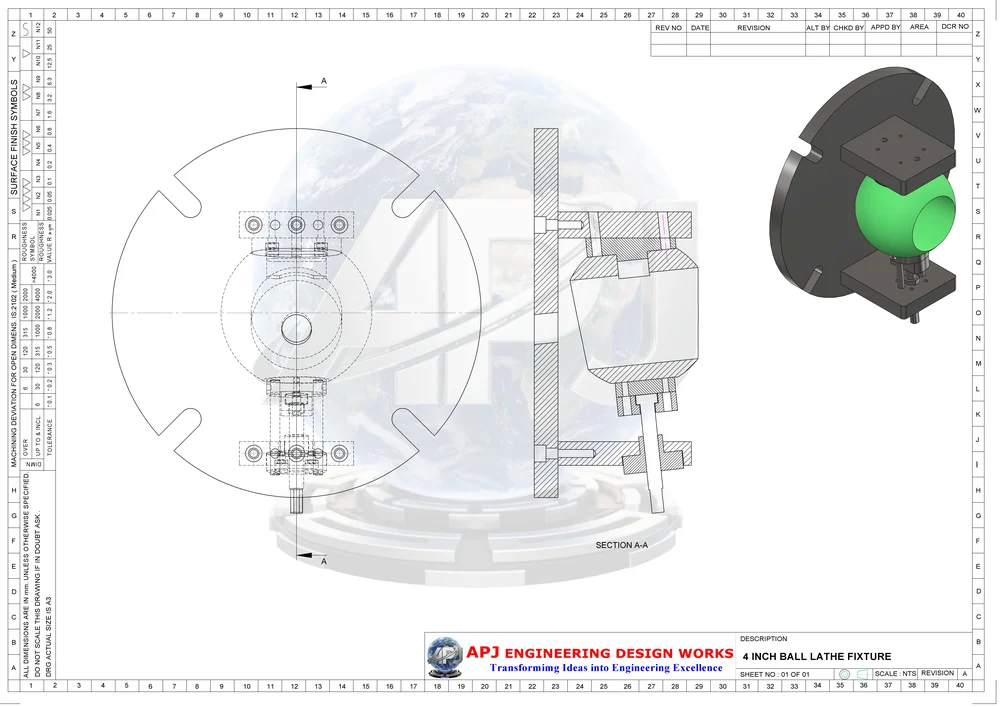
A fixture needs to hold a component in a useful position for a specific operation. Understanding that operation is the starting point for a practical workholding design.
Understand the part and the operation
Provide a component drawing or model and describe the machining, inspection or assembly task. Explain which features must remain accessible and how the component will be loaded and removed.
The part's material, shape and important surfaces influence the discussion. A slender or delicate component may need a different support arrangement from a rigid casting.
Discuss location and clamping together
Location establishes the relationship between the component and the operation. Clamping holds the component against the intended supports. Both need to be considered with the direction of the expected loads and the surfaces that may be contacted.
- Which surfaces can be used for location?
- Which surfaces must remain free from clamping marks?
- What tool or inspection access is required?
- How will the operator confirm correct loading?
- What space is available around the machine?
Consider the operator's sequence
Review the steps needed to load, locate, clamp and release the component. Access, visibility and handling matter as much as the appearance of the CAD assembly. Discuss any lifting or handling requirements as part of the scope.
Define the review and documentation
Agree on the design outputs and the checks needed before the fixture is manufactured. Review the arrangement with the people responsible for the machine, the process and the component.
APJ Engineering Design Works provides jigs, fixtures and gauges design. Explore our portfolio or contact our team with the component and operation details.